


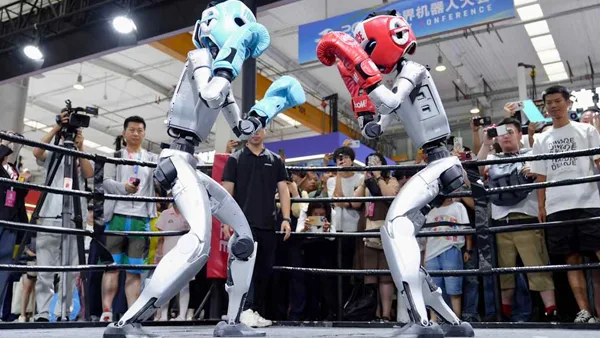
Chinese robotics company Unitree is preparing to raise around $610 million (₹5,000+ crore) through a planned initial public offering (IPO) in Shanghai, signalling growing investor interest in the fast-evolving humanoid robotics space.
The Hangzhou-based startup, founded in 2016, has rapidly transitioned from making quadruped robot dogs to developing advanced humanoid machines. This shift is already paying off, with humanoid robots emerging as the company’s primary growth driver and contributing a significant share of its revenue.
The proposed IPO could become one of the largest tech listings in China in recent times, highlighting the country’s strong push to dominate next-generation technologies such as artificial intelligence and robotics.
Unitree’s growth has been particularly sharp over the past year. The company has reported a massive surge in revenue and profits, driven largely by increasing demand for its humanoid robots across sectors like enterprise services, research, and public-facing applications such as reception and guided tours.
Interestingly, while humanoid robots are often seen as futuristic, their real-world deployment is still in early stages. Most current use cases remain limited to controlled environments, rather than large-scale industrial automation.
For India, this development carries important implications. As Indian startups and enterprises increasingly explore automation and AI-led productivity, China’s rapid advancements supported by strong manufacturing ecosystems and government backing could intensify global competition. At the same time, it opens opportunities for collaboration, innovation, and adoption in sectors like manufacturing, healthcare, and logistics.
Industry experts believe humanoid robotics could become a major frontier technology over the next decade, similar to how AI and cloud computing transformed businesses globally. China’s aggressive investment in this space positions companies like Unitree at the forefront of this shift.
However, challenges remain. High production costs, limited real-world applications, and the need for more advanced AI capabilities continue to slow widespread adoption.
As Unitree moves ahead with its IPO plans, the success of this listing will be closely watched, not just in China, but globally as a key indicator of how ready the world is to embrace humanoid robots at scale.

